Learn proper form and foundational techniques for effective jump rope training.
When you first approach the movement patterns taught in fitness classes, it might seem like a simple exercise, but mastering the mechanics takes patience and attention to detail. The exercises in this guide are designed to improve your coordination, timing and body awareness — foundations that make skipping far more effective than most people realize. Start by standing tall with your feet together, holding the rope handles comfortably at your sides. Your weight should be evenly distributed, knees slightly bent and elbows kept close to your body. This neutral starting position matters because everything you do next flows from how well you can maintain balance while the rope swings through your hands.
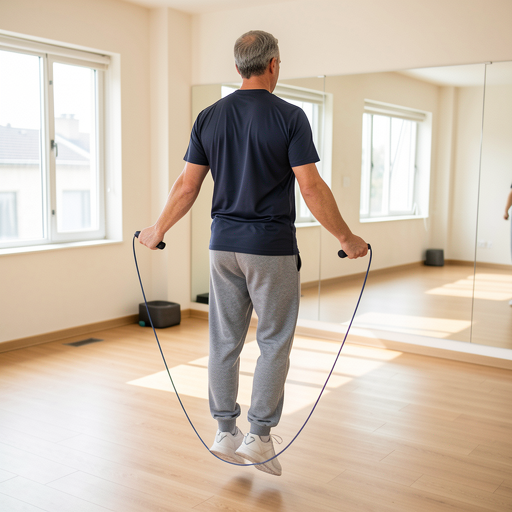
The forward step and sideways step exercises build the stability you need before adding speed. Step one foot forward, keeping your torso upright, then bring the other foot back to meet it. Practice moving slowly at first so your body can learn the rhythm. When you return to your starting point, let the rope pass through your hands naturally — don't pull or jerk. Repeat this pattern several times, alternating which foot leads, then rehearse it with a training jump rope once the steps feel automatic.
👟
The straight-arm reach movements are equally important; they teach you to keep your elbows locked and your wrists in a clean, vertical position. A dropping elbow is one of the most common mistakes beginners make and it wastes energy that should be going into the jump itself. Building strength through these controlled movements translates directly into better endurance and technique when you're actually skipping at a faster pace. Try the hook-swing variation, where you rotate your elbow slightly forward as you raise your hand, creating a smooth circular motion rather than a stiff up-and-down movement.
🤙🏾
This kind of practice develops the small stabilizing muscles around your shoulders and wrists, making the whole exercise feel lighter and more fluid. Many people who want to jump rope consistently skip the groundwork and rush into full-speed jumping, but they often hit a wall of fatigue or frustration. The slower drills build the neuromuscular pathways that make advanced patterns feel effortless later on. Consistency beats intensity every time in skipping practice.
🌎
Even twenty minutes of focused practice on these movement fundamentals will produce better results than an hour of sloppy, unstructured jumping. Track your progress by noting how much more comfortable you feel with each repetition and pay attention to small improvements in your balance and timing. Your wrists, shoulders and core will adapt to the demands you place on them and soon you will find that the exercises which felt awkward at the start now flow together naturally. Stick with the basics, give yourself time to develop proper form and the cardiovascular and coordination benefits of skipping will come as a rewarding bonus rather than a distant goal.