Strengthen your hips and quads for safer, more effective jump rope training.
Hip joint stability matters far more than most athletes realize and building that foundation takes deliberate work. The capsule surrounding your hip acts as both a shock absorber and a stabilizer, connecting the base of your spine to the top of the femur while keeping everything aligned during dynamic movement. Strong hip joint stability requires consistent conditioning and patience. When you strengthen the muscles around this area — particularly the quadriceps and the supporting structures — you create a resilient foundation that handles impact far better than a weak one ever could. The four heads of the quadriceps work together to stabilize the knee and transfer power efficiently through the leg, which becomes especially important when your feet are moving rapidly. This is precisely why skipping rope demands such strong hip mechanics and why neglecting them leads to discomfort or injury over time.
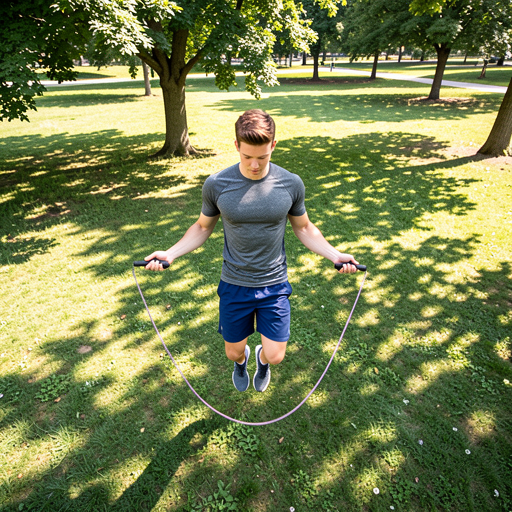
Most people walk into their first session wanting to jump rope because they've heard it torches calories, but the real magic lies in how it conditions your entire kinetic chain. Every time your foot strikes the ground, your hip joint absorbs force, your quadriceps fire to control landing and your core engages to maintain posture. The hip capsule and surrounding ligaments adapt to this repetitive loading by becoming tougher and more resilient. Over weeks of consistent practice, you will notice improvements that extend well beyond your cardiovascular fitness — better running form, reduced knee pain and a more athletic posture. To jump rope effectively, focus on keeping your movements tight and controlled rather than wild and exhausting.
⚒️
Quality repetitions build skill; quantity without form just builds fatigue. The quadriceps deserve special attention because they bear the brunt of the work during any jumping routine. The rectus femoris, vastus lateralis, vastus medialis and vastus intermedius each contribute to knee extension and shock absorption, firing in sequence with every bounce. When these muscles are strong and conditioned, jumping rope feels effortless. When they are weak or imbalanced, your knees and lower back take the beating instead.
😍
Include squats, lunges and single-leg exercises in your training to bring up any lagging areas. Strong quads protect the knee joint and make jumping rope safer, more efficient and genuinely enjoyable. This is not about building massive legs for aesthetics — it is about creating a functional foundation that supports your fitness goals. Consistency beats intensity every single time when you are building a skipping rope habit. Start with ten minutes a day and gradually increase duration before you worry about advanced moves like double-unders or crossovers.
👽
Your hip joints and quadriceps need time to adapt to the impact and rushing that process leads to overuse injuries that will sideline you for weeks. Track your progress, rest when your legs feel heavy and remember that the compound benefits of skipping rope extend to coordination, bone density and mental resilience. The work you put into stabilizing your hips and strengthening your legs will pay dividends across every jump rope you perform. Keep showing up, keep moving with purpose and trust the process.